
Chilimjusht Festival 2026: A Guide to the Vibrant Kalash Spring Celebration
May 09, 2026
Chitral Hive
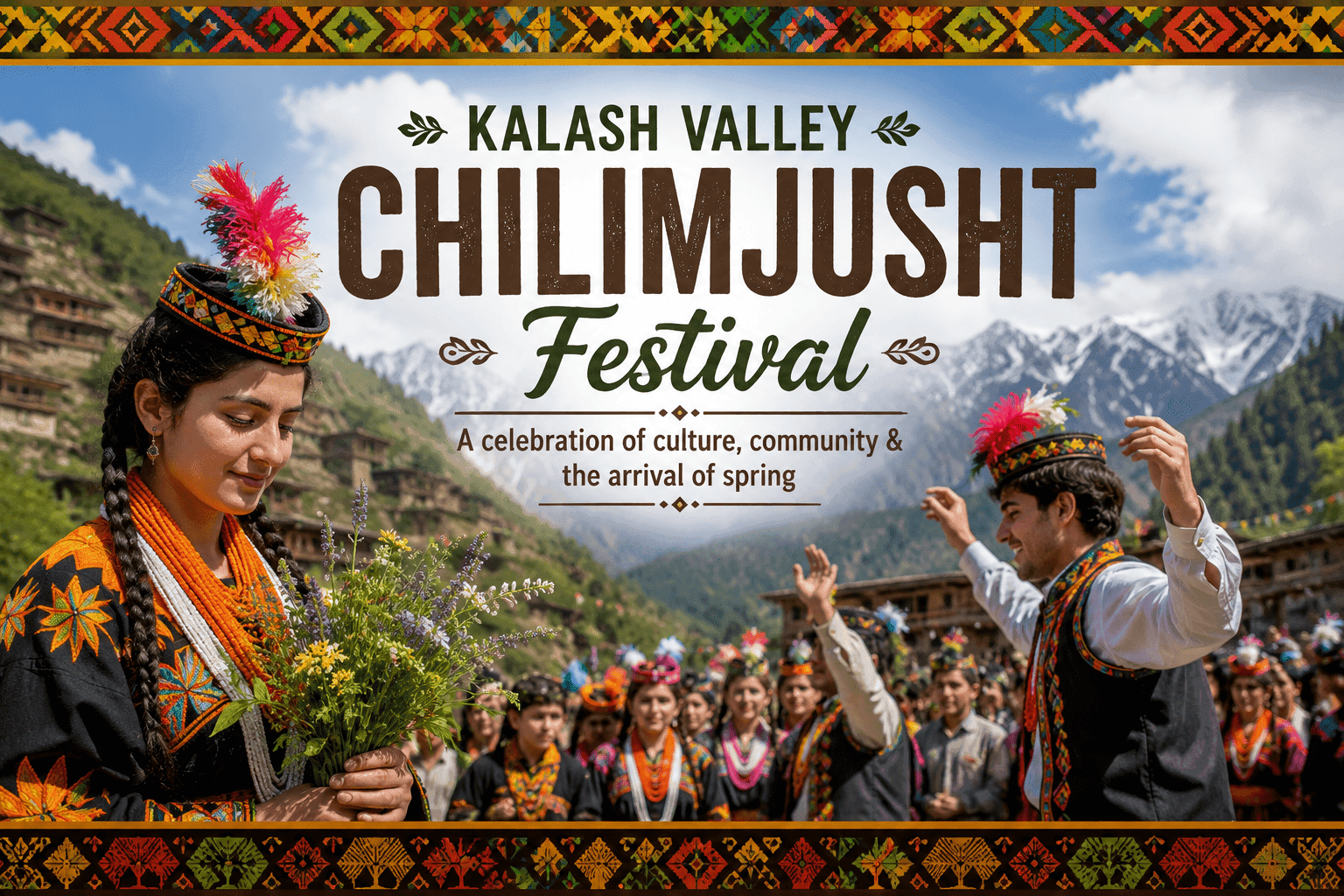
The Vibrant Spirit of Chilimjusht: Celebrating Spring in Kalash ValleNorthern Pakistan lies a culture so unique it feels like a portal to another era. The Chilimjusht Festival (also known as Chilam Joshi) is the annual spring celebration of the Kalash people—an indigenous community in the valleys of Bumburet, Rumbur, and Birir.
As the snow melts and the fruit trees begin to bloom, the Kalash gather to thank their deities for the abundance of nature and to pray for the safety of their fields and livestock.
Festival Dates & Location (2026)
For 2026, the festivities are scheduled to take place from May 13th to May 18th.
- Main Location: Bumburet Valley (most accessible for tourists).
- Secondary Locations: Rumbur and Birir Valleys (offering a more rugged, traditional experience).
Core Rituals of Chilimjusht
The festival is a multi-day event filled with specific rituals that reinforce community bonds and spiritual gratitude.
1. The Milk Ritual (Milk Day)
Days before the main event, the Kalash collect milk from their cattle. This milk is distributed among the community and symbolizes purity and prosperity. It is a sacred offering to ensure the health of their livestock for the coming year.
2. Traditional Dance and Music
The heart of Chilimjusht is the Culu (circle dance). To the rhythmic beat of large handmade drums, women in heavy, beaded headpieces and black embroidered gowns (piran) link arms and dance in large circles. The elders often chant ancient folk tales and legends, passing the oral history of the Kalash to the younger generation.
3. Matchmaking and Social Bonding
Chilimjusht is famously known as a time for romance. It is one of the primary social gatherings where young men and women from different villages meet. Traditionally, many couples choose their life partners during these days, often culminating in public announcements of marriages at the end of the festival.
Why the Kalash People are Unique
The Kalash are the last remaining polytheistic tribe in the region. Often cited (though debated by historians) as descendants of Alexander the Great’s soldiers, they possess a distinct genetic and linguistic heritage. Unlike the surrounding areas, the Kalash lifestyle is defined by:
- Artistic Dress: Women wear the Shushut (headdress) decorated with cowrie shells and coins.
- Open Social Structure: There is a unique level of gender equality in social dances and community decision-making.
- Spiritual Shrines: The valleys are dotted with wooden altars and shrines dedicated to deities like Goshidai and Dezau.
Essential Travel Tips for 2026
- How to Get There: Most travelers start from Islamabad. It is a 10–12 hour drive via the Lowari Tunnel to Chitral, followed by a 2-hour jeep ride into the valleys.
- Accommodation: Book early! During festival dates, guest houses in Bumburet and Rumbur fill up months in advance. Camping is a popular alternative.
- Cultural Etiquette: Always ask for permission before taking photos of individuals. While the Kalash are hospitable, certain areas (like the Bashaleni or women’s retreat houses) are strictly off-limits to outsiders.
- What to Pack: The weather in May is pleasant during the day but can get chilly at night. Bring sturdy walking shoes and modest clothing to respect local sensibilities.
Pro Tip: Visit the Kalash Museum in Bumburet before the festival begins. It provides essential context on the symbolism of the rituals you are about to witness.
Whether you are a photographer, a culture enthusiast, or a soul-seeker, the Chilimjusht festival offers a glimpse into a world where humanity and nature exist in vibrant, colorful harmony.